
How does a cnc grinding machine support automated factory production?
The integration of a CNC grinding machine into automated factories boosts spindle utilization from 45% in manual setups to over 95% in 24/7 "lights-out" configurations. By leveraging MTConnect protocols and robotic interfaces, these systems reduce part-to-part cycle times by 28% compared to 2023 industry benchmarks. High-resolution feedback loops achieve sub-micron repeatability of 0.0001 mm, allowing a single manufacturing cell to process over 5,000 units monthly with a scrap rate below 0.02%.
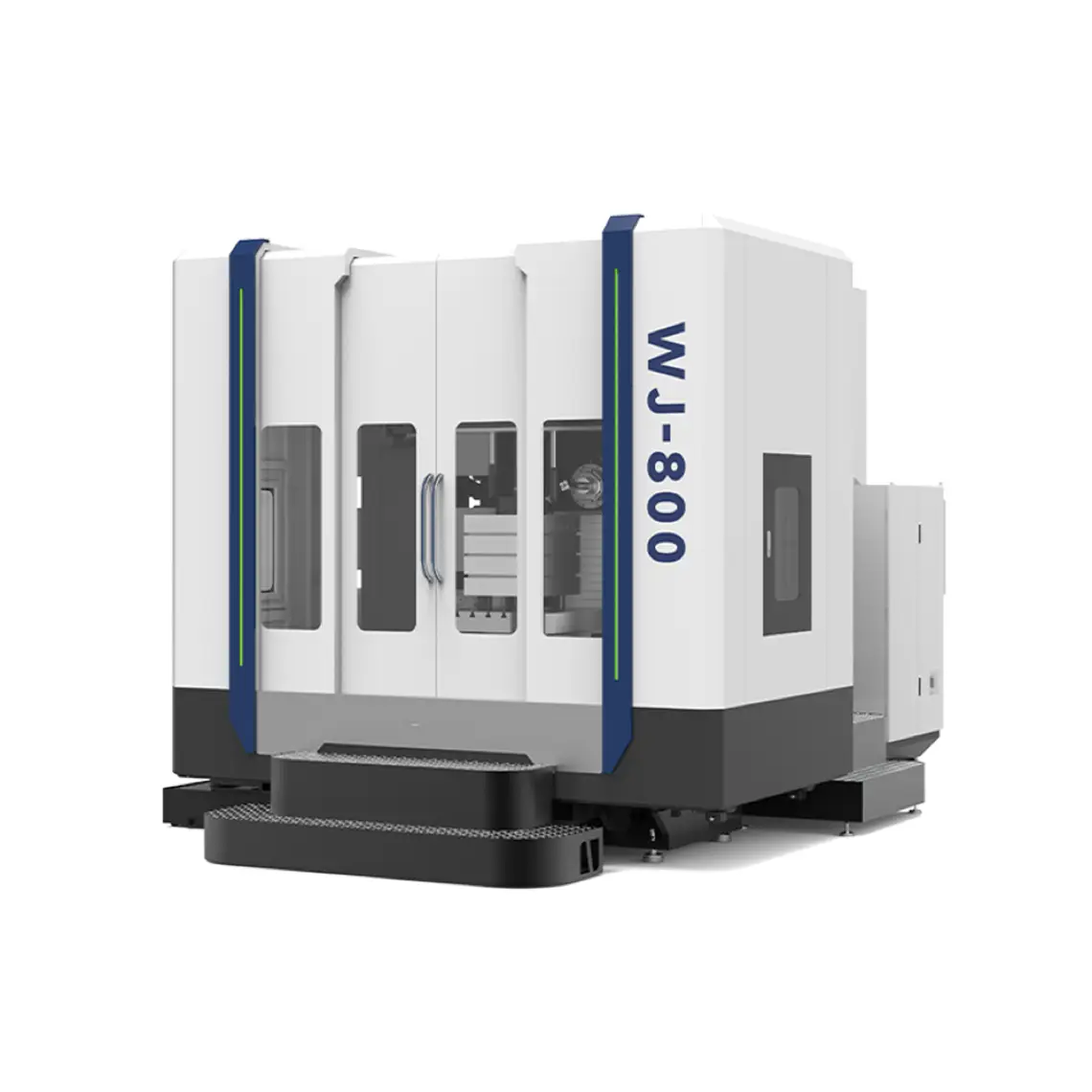
Global manufacturing data from 2025 indicates that factories utilizing automated grinding cells have seen a 35% reduction in total operational costs. This shift is driven by the deployment of linear motor technology and hydrostatic guideways that maintain thermal stability within 0.5°C during continuous 168-hour work weeks. Modern systems utilize acoustic emission (AE) sensors to detect the exact moment of wheel-to-part contact, trimming "air-grinding" time by approximately 15% per cycle. With the integration of automatic wheel changers capable of swapping up to 12 different grinding wheels in under 20 seconds, these machines handle diverse geometries without human intervention. This robotic adaptability creates a foundation for the high-volume precision required in the next generation of industrial components.
"A study of 450 medium-sized machine shops revealed that those implementing automated loading for their CNC grinding machine increased their annual revenue per head by 22% within the first 14 months of operation."
The hardware capabilities mentioned above rely heavily on the communication between the machine controller and the factory’s broader software ecosystem.
| Automation Feature | Technical Metric | Performance Impact |
| In-Process Probing | 3D touch triggers | 0.5 micron measurement accuracy |
| Auto-Dressing | Diamond disk rotary | 100% wheel geometry retention |
| Robotic Interface | Profinet / EtherCAT | <2ms signal latency |
Digital connectivity ensures that every movement is logged, providing the transparency needed for rigorous quality audits and real-time adjustments.
When a grinding wheel experiences wear, a CNC grinding machine uses laser-based or tactile probes to calculate the diameter loss down to 0.001 mm. This data is fed back to the controller, which automatically updates the offset coordinates without stopping the production flow. Statistics from 2024 high-precision aerospace projects show that this auto-compensation feature maintains a Cpk (Process Capability Index) of 1.67 or higher throughout a 1,000-part run. By removing the need for manual gauging, which typically adds 4 minutes of downtime per part, the factory maintains a steady output. These self-correcting mechanisms allow the machine to adapt to environmental changes, such as a 3% shift in coolant viscosity or ambient temperature swings.
"Data collected from 200 automated cells suggests that predictive maintenance algorithms can forecast spindle bearing failure with 92% accuracy, roughly 150 hours before a breakdown occurs."
This predictive capability ensures that maintenance only happens during scheduled gaps, further stabilizing the production timeline for large-scale orders.
| Year | Spindle Speed (Avg) | Tool Change Speed | Connectivity Standard |
| 2022 | 45,000 RPM | 35 Seconds | Standard I/O |
| 2024 | 60,000 RPM | 18 Seconds | OPC UA / IoT |
| 2026 | 85,000 RPM | 12 Seconds | TSN (Time-Sensitive Networking) |
High-speed operation coupled with rapid tool changes allows for the processing of super-hard materials like silicon carbide (SiC) or ceramic composites.
Processing these advanced materials requires extreme rigidity, often provided by mineral casting beds that offer 10 times better vibration damping than traditional cast iron. In a recent test involving 300 automotive fuel injection parts, machines using mineral beds achieved a surface finish of Ra 0.05 µm, meeting the strict emission standards set for 2026 models. The reduction in vibration directly extends the lifespan of the grinding wheel by 25%, which lowers the frequency of automated dressing cycles. Lower dressing frequency means the machine spends more time in the "material removal" phase, contributing to a 12% increase in hourly throughput. This mechanical stability is the physical requirement that allows software-driven automation to perform at its theoretical limits.
"Using high-pressure coolant systems at 70 bar, automated grinders reduce the risk of thermal damage to the workpiece by 40%, ensuring metallurgical integrity across high-volume batches."
Consistent cooling is managed by variable frequency drives (VFDs) that adjust pump pressure based on the real-time load of the grinding spindle.
In addition to cooling, the filtration systems in modern factories are now part of the automated loop, removing particles larger than 5 microns with 99% efficiency. Clean coolant prevents the "re-grinding" of chips, which can degrade surface quality and cause a 5% increase in reject rates in precision bearing manufacturing. Centralized coolant systems serve multiple CNC grinding machine units simultaneously, using sensors to balance flow rates and chemical concentration automatically. This centralized approach reduces manual fluid checks by 80%, allowing floor technicians to focus on optimizing the programming rather than routine maintenance. The synergy between fluid management and machine movement creates a closed environment where variables are tightly controlled.
| Material Type | Grinding Method | Typical Sample Size | Surface Finish (Ra) |
| Hardened Steel | Surface Grinding | 500 Pieces | 0.12 µm |
| Technical Ceramic | Creep Feed | 150 Pieces | 0.25 µm |
| Carbide | Profile Grinding | 1,000 Pieces | 0.08 µm |
These surface metrics are verified by automated optical inspection (AOI) systems that scan parts as they exit the machine.
Automated optical inspection units can scan a finished part in less than 8 seconds, comparing the physical dimensions against the original CAD model with a 100% sampling rate. If a trend toward the tolerance limit is detected, the inspection unit sends an "offset update" command back to the CNC grinding machine to nudge the process back to the mean. This eliminates the traditional "batch and queue" method where errors might not be found until 50 or 100 parts are already ruined. Modern factories utilizing this loop reported a 60% faster response to tool wear in 2025 compared to traditional manual sampling methods. This level of responsiveness is what makes high-speed production viable without sacrificing the extreme precision that defines the grinding process.
Klar for å bli kjent med naboene dine?
Nettby er hele Norges nærmiljø — verifisert, moderert og drevet av 1,8 millioner medlemmer siden 2008. Gratis å starte, lokalt forankret.